
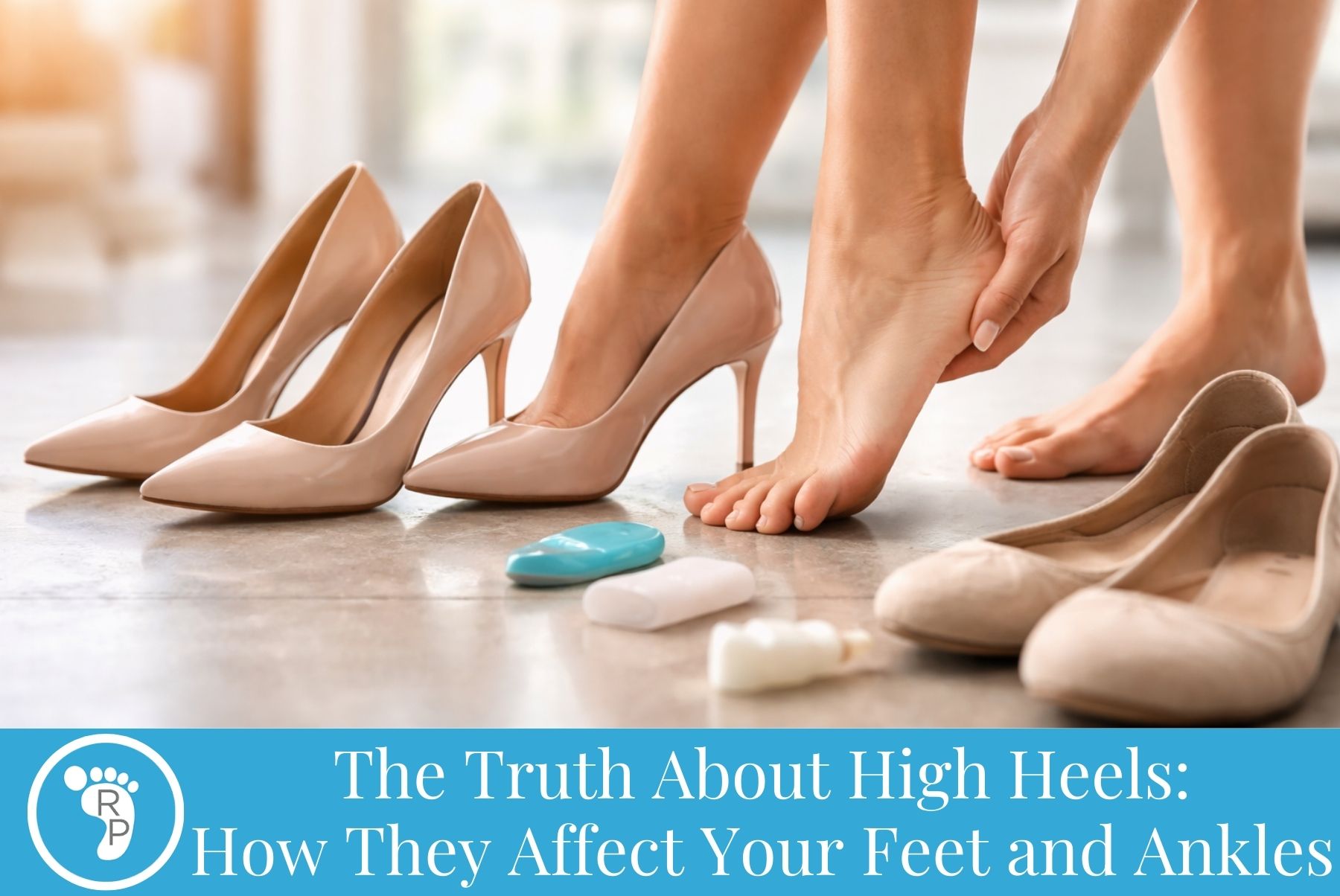
High heels are a timeless fashion staple. They elevate your height, enhance posture, and complete countless professional and social looks. But while high heels may boost confidence, they can also place significant strain on your feet and ankles.
At Dr. Rahul Patel, DPM, D. ABFAS, FACFAS, we frequently see patients experiencing foot pain linked to prolonged high heel use. Understanding how heels affect your body can help you make informed choices that protect your long-term foot health.
Let’s explore the truth about high heels—and what you can do to minimize their impact.
How High Heels Change Your Foot Mechanics
When you wear flat shoes, your body weight is distributed relatively evenly across your heel and forefoot. High heels, however, shift your weight forward onto the ball of your foot.
The higher the heel, the greater the pressure on the forefoot. This altered position doesn’t just affect your feet—it changes your ankle alignment, calf tension, and overall posture.
Over time, these biomechanical changes can contribute to:
- Forefoot pain
- Increased bunion risk
- Ankle instability
- Achilles tendon shortening
- Calluses and nerve irritation
Let’s break these down further.
Forefoot Pressure: The Hidden Strain
One of the most significant effects of high heels is increased forefoot pressure.
What Happens?
- Elevated heels push your body weight forward.
- The ball of your foot absorbs most of the pressure.
- Narrow toe boxes compress the toes together.
Potential Consequences
- Metatarsalgia (ball-of-foot pain)
- Stress fractures
- Morton’s neuroma (nerve irritation between toes)
- Callus formation
The longer and more frequently heels are worn—especially heels over 2–3 inches—the more cumulative stress your forefoot experiences.
Bunion Risk: Why Heels Can Contribute
While bunions have a strong genetic component, footwear plays a major role in their progression.
High heels—particularly those with pointed or narrow toe boxes—force the toes into unnatural positions. This can:
- Increase pressure on the big toe joint
- Worsen joint misalignment
- Accelerate bunion development in predisposed individuals
It’s important to note: high heels don’t “cause” bunions by themselves. However, they can significantly aggravate the condition and speed its progression if you are already genetically prone.
Achilles Tendon Shortening: A Long-Term Concern
Your Achilles tendon connects your calf muscle to your heel bone. When you wear high heels, your foot remains in a constantly pointed (plantarflexed) position.
Over time:
- The calf muscles adapt to the shortened position.
- The Achilles tendon tightens.
- Flexibility decreases.
When switching back to flat shoes, this tightness can cause:
- Heel pain
- Achilles tendinitis
- Increased strain during walking or exercise
- Higher risk of injury
Chronic shortening may also affect your overall gait and posture.
Ankle Instability and Injury Risk
High heels reduce the natural stability of your foot and ankle. Stiletto-style heels are especially problematic because:
- They offer a narrow base of support.
- They increase ankle wobble.
- They raise the risk of sprains and falls.
Ankle sprains are not only painful—they can lead to chronic instability if not properly treated.
Are All High Heels Bad?
Not necessarily. The key is moderation and smart choices.
Factors that influence foot strain include:
- Heel height (lower is generally better)
- Toe box width (avoid narrow, pointed styles)
- Arch support
- Cushioning
- Frequency and duration of wear
Shoes with a wider heel base or platform can reduce some of the strain compared to thin, tall stilettos.
How to Protect Your Feet If You Wear High Heels
You don’t have to eliminate heels completely. Consider these foot-friendly strategies:
1. Limit Heel Height
Aim for heels under 2 inches for daily wear.
2. Alternate Your Shoes
Switch between heels and supportive flats during the day.
3. Stretch Your Calves
Daily calf and Achilles stretches can counteract tendon shortening.
4. Use Orthotic Inserts
Custom orthotics or cushioned insoles can redistribute pressure.
5. Strengthen Your Feet
Simple exercises like toe curls and ankle mobility work improve stability.
6. Don’t Ignore Pain
Persistent foot or ankle discomfort is not normal—and shouldn’t be ignored.
When to See a Podiatrist
You should schedule an evaluation if you experience:
- Ongoing forefoot pain
- Big toe joint discomfort
- Swelling or redness
- Frequent ankle sprains
- Heel pain after wearing heels
- Numbness or tingling in the toes
Early treatment can prevent minor issues from becoming long-term problems.
At Dr. Rahul Patel, DPM, D. ABFAS, FACFAS, we provide comprehensive, evidence-based care for foot and ankle conditions—from conservative treatments to advanced surgical options when necessary.
Frequently Asked Questions (Q&A)
Q: How high is too high for heels?
A: Heels above 3 inches significantly increase forefoot pressure and ankle instability. For daily wear, heels under 2 inches are generally safer.
Q: Can wearing heels permanently damage my feet?
A: Prolonged, frequent use can contribute to chronic conditions like bunions, hammertoes, Achilles tightness, and nerve irritation—especially without proper stretching or support.
Q: Do platform heels reduce pressure?
A: Platforms can reduce the effective heel incline slightly, but they still shift weight forward. They are not completely protective.
Q: Are wedges better than stilettos?
A: Wedges typically provide better stability due to a wider base of support, reducing ankle sprain risk.
Q: Can I reverse Achilles tendon shortening?
A: In many cases, consistent stretching and physical therapy can improve flexibility. Severe cases may require medical intervention.
Q: Do orthotics help with high heels?
A: Yes. Certain orthotic designs can redistribute pressure and improve alignment. A podiatrist can recommend options tailored to your needs.
Q: If I already have bunions, should I stop wearing heels completely?
A: Not necessarily—but limiting height, choosing wider toe boxes, and wearing heels less frequently can help prevent progression.
Expert Foot & Ankle Care in New York, NY
If high heels are causing you discomfort—or if you want expert guidance on protecting your foot health—schedule a consultation with:
Dr. Rahul Patel, DPM, D. ABFAS, FACFAS
245 5th Ave, Suite 310
New York, NY 10016
Phone: (347) 851-1491
Website: https://docrahulpatel.com
Appointments: https://docrahulpatel.com/appointments/
