
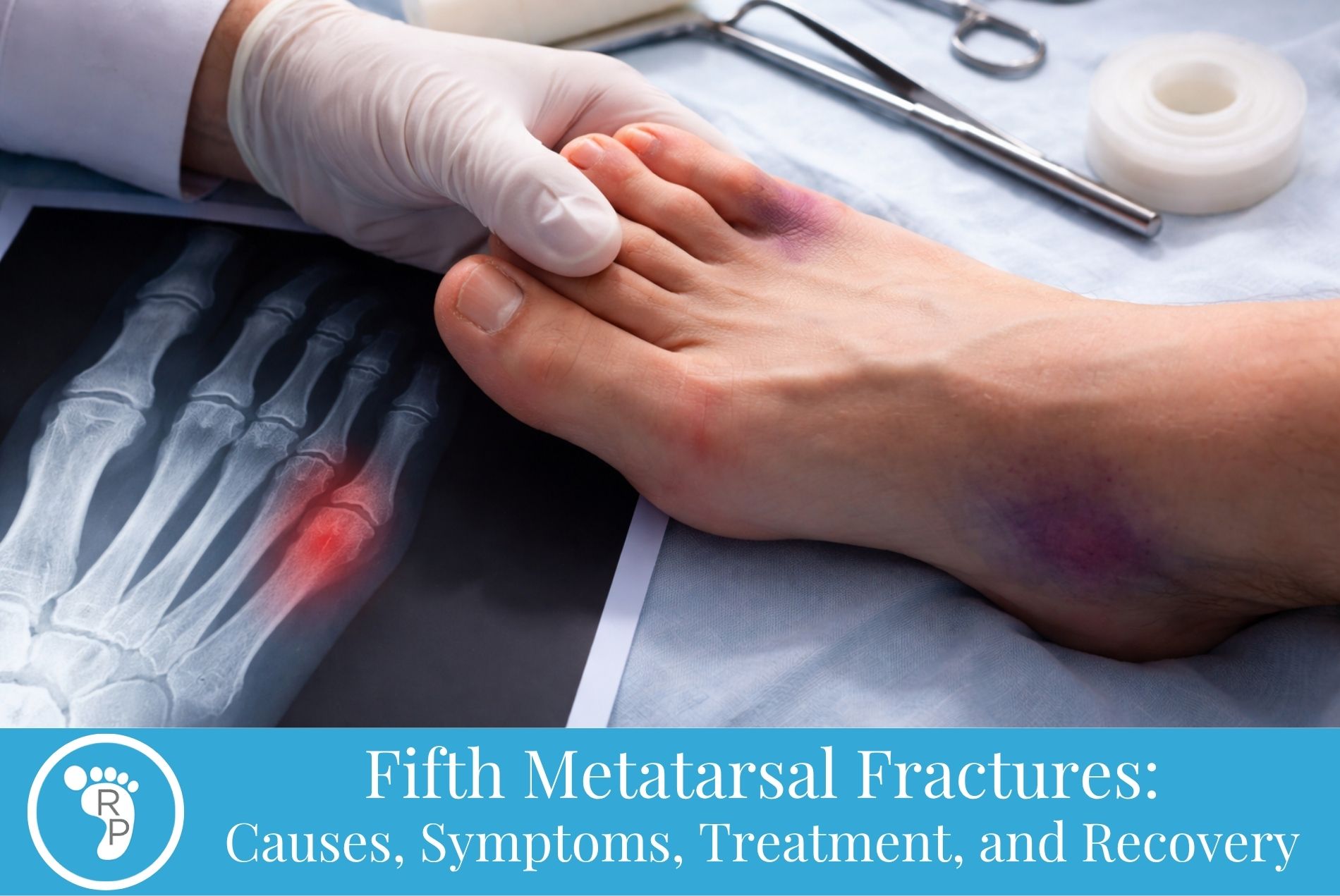
Foot injuries can significantly disrupt your daily life, especially when they affect your ability to walk comfortably. One of the most common foot injuries is a fifth metatarsal fracture, which involves a break in the long bone on the outer side of the foot. At Dr. Rahul Patel, DPM, D. ABFAS, FACFAS, we specialize in diagnosing and treating these fractures with expert care to help you recover quickly and safely.
What Is a Fifth Metatarsal Fracture?
The fifth metatarsal is the long bone on the outer edge of your foot that connects to your little toe. A fracture in this bone can occur in several locations and may vary in severity.
There are three main types of fifth metatarsal fractures:
- Avulsion Fracture: A small piece of bone is pulled off by a tendon or ligament.
- Jones Fracture: Occurs in a specific area with limited blood supply, making healing more challenging.
- Stress Fracture: Develops over time due to repetitive stress or overuse.
Common Causes
Fifth metatarsal fractures can happen suddenly or develop gradually. Common causes include:
- Twisting the foot or ankle
- Sports injuries (especially running, basketball, or soccer)
- Direct trauma to the foot
- Overuse or repetitive stress
- Poor footwear or improper training techniques
Symptoms to Watch For
If you suspect a fracture, look for these symptoms:
- Pain along the outer side of the foot
- Swelling and bruising
- Difficulty walking or bearing weight
- Tenderness to touch
- Visible deformity in severe cases
Ignoring these symptoms can lead to complications, especially with fractures like Jones fractures that have slower healing times.
Diagnosis
At Dr. Rahul Patel’s office, diagnosis typically includes:
- A thorough physical examination
- Imaging such as X-rays or, if needed, MRI/CT scans
Accurate diagnosis is essential to determine the type of fracture and the best treatment plan.
Treatment Options
Treatment depends on the type and severity of the fracture.
Non-Surgical Treatment
Many fractures can be treated conservatively:
- Rest and activity modification
- Immobilization with a cast, boot, or brace
- Ice and elevation to reduce swelling
- Pain management
- Gradual return to activity
Surgical Treatment
Surgery may be recommended for:
- Displaced fractures
- Jones fractures that don’t heal properly
- Athletes needing faster recovery
Surgical options often involve placing screws or plates to stabilize the bone and promote healing.
Recovery and Rehabilitation
Healing time varies depending on the type of fracture:
- Avulsion fractures: 4–8 weeks
- Jones fractures: 6–12 weeks (or longer)
- Stress fractures: Several weeks to months
Physical therapy may be recommended to restore strength, flexibility, and mobility. Following your doctor’s instructions is critical for a full recovery.
Preventing Future Injuries
You can reduce your risk of fractures by:
- Wearing supportive footwear
- Gradually increasing activity levels
- Strengthening foot and ankle muscles
- Maintaining proper training techniques
- Addressing foot pain early
Frequently Asked Questions (Q&A)
What is the most serious type of fifth metatarsal fracture?
A Jones fracture is considered the most serious because it occurs in an area with limited blood supply, making healing slower and more complicated.
Can I walk on a fifth metatarsal fracture?
It depends on the severity. Some minor fractures allow limited walking with support, but many require avoiding weight-bearing to prevent worsening the injury.
How do I know if I broke my foot or just sprained it?
Both injuries can cause pain and swelling, but fractures often involve more localized pain, difficulty bearing weight, and sometimes deformity. An X-ray is needed for confirmation.
Do all fifth metatarsal fractures require surgery?
No. Many fractures heal with conservative treatment. Surgery is typically reserved for severe, displaced, or non-healing fractures.
How long does it take to fully recover?
Recovery can take anywhere from 4 weeks to several months, depending on the type of fracture and your overall health.
Can a fracture heal on its own?
Some minor fractures can heal with rest and immobilization, but proper medical evaluation is essential to ensure correct healing.
What happens if a fracture is left untreated?
Untreated fractures can lead to chronic pain, improper healing (malunion), or nonunion, which may require more complex treatment later.
When should I see a podiatrist?
You should seek care immediately if you experience persistent pain, swelling, or difficulty walking after a foot injury.
Contact Information
Dr. Rahul Patel, DPM, D. ABFAS, FACFAS
245 5th Ave, Suite 310
New York, NY 10017
Phone: (347) 851-1491
Website: https://docrahulpatel.com
Appointments: https://docrahulpatel.com/appointments/
