
By Dr. Rahul Patel, DPM, D. ABFAS, FACFAS
Foot injuries can range from minor sprains to complex structural damage, and one of the most commonly overlooked yet serious conditions is a Lisfranc injury. Often mistaken for a simple midfoot sprain, this injury can lead to long-term pain and instability if not properly diagnosed and treated.
At the practice of Dr. Rahul Patel, DPM, D. ABFAS, FACFAS, we specialize in advanced foot and ankle care, helping patients in New York City recover fully and safely from injuries like Lisfranc damage.
What Is a Lisfranc Injury?
A Lisfranc injury involves damage to the ligaments and/or bones in the midfoot, specifically where the metatarsal bones connect to the tarsal bones. This area is critical for maintaining the arch and stability of your foot.
These injuries can range from:
- Mild ligament strains
- Partial tears
- Complete dislocations or fractures
Because of its role in weight-bearing, even a small injury in this area can significantly impact mobility.
Common Causes of Lisfranc Injuries
Lisfranc injuries can occur in both athletes and non-athletes. Common causes include:
- Twisting the foot while it’s planted (e.g., sports injuries)
- Falls or missteps on uneven surfaces
- Car accidents or high-impact trauma
- Dropping a heavy object on the foot
Athletes in sports like football, soccer, and basketball are particularly at risk due to sudden directional changes.
Symptoms to Watch For
Lisfranc injuries are often misdiagnosed as simple sprains. However, key warning signs include:
- Pain in the midfoot, especially when standing or walking
- Swelling on the top of the foot
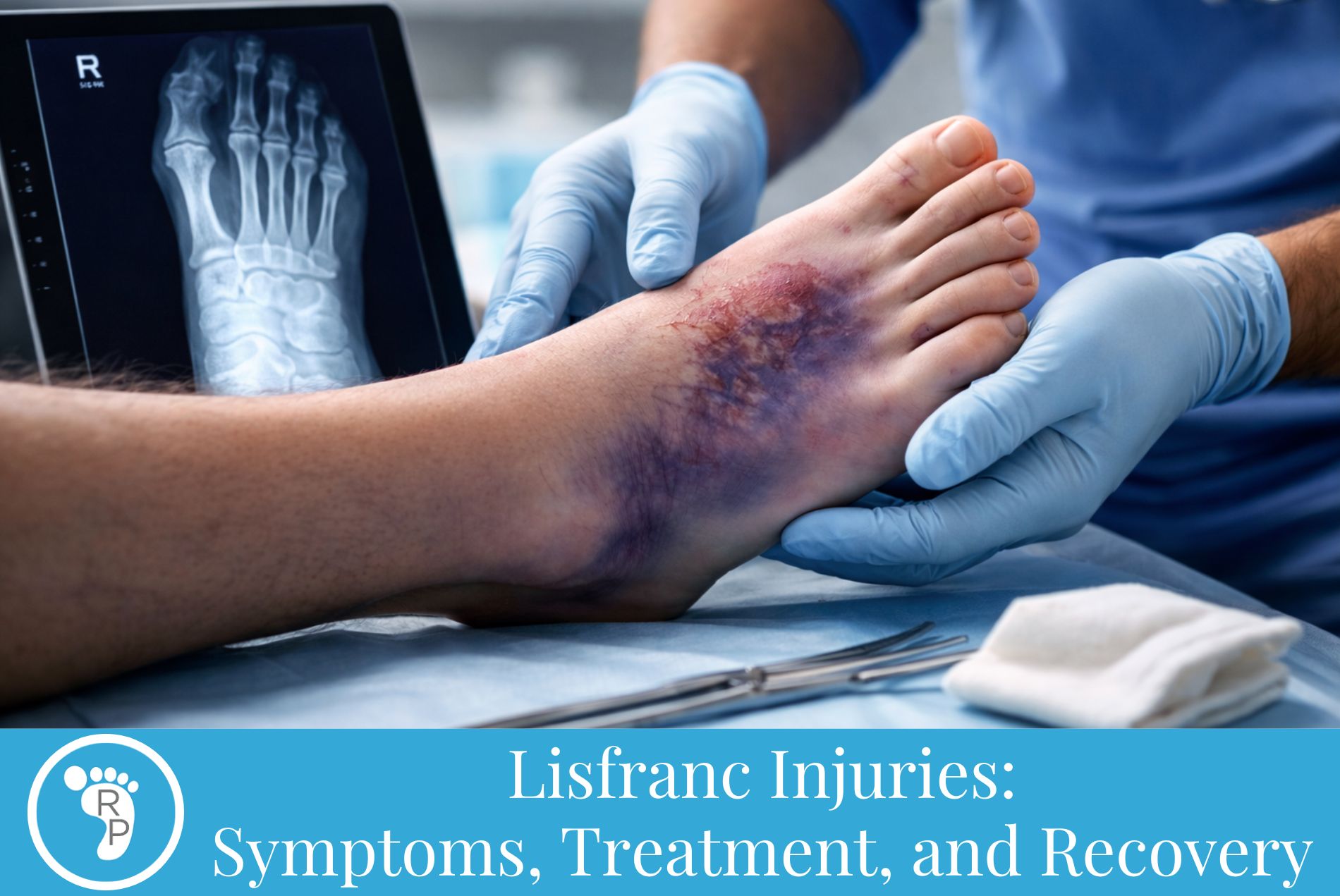
- Bruising on the top and bottom of the foot (a major red flag)
- Difficulty bearing weight
- A feeling of instability or weakness
If you notice these symptoms, it’s important to seek evaluation from a foot specialist promptly.
Why Early Diagnosis Matters
Delayed or incorrect diagnosis can lead to:
- Chronic pain
- Arthritis in the midfoot
- Loss of arch stability
- Long-term disability
At our clinic, advanced imaging such as X-rays, CT scans, or MRIs may be used to accurately diagnose the injury and determine severity.
Treatment Options
Treatment depends on the severity of the injury.
Non-Surgical Treatment
For mild cases:
- Immobilization with a cast or boot
- Non-weight-bearing for several weeks
- Physical therapy for rehabilitation
Surgical Treatment
For moderate to severe injuries:
- Realignment of bones
- Internal fixation with screws or plates
- In some cases, fusion of joints
Dr. Rahul Patel specializes in surgical and non-surgical management to ensure optimal outcomes.
Recovery and Rehabilitation
Recovery can take anywhere from 6 weeks to several months, depending on severity and treatment method.
Key components of recovery:
- Gradual return to weight-bearing
- Physical therapy to restore strength and mobility
- Custom orthotics for long-term support
Following your treatment plan closely is essential for a full recovery.
Preventing Lisfranc Injuries
While not all injuries are preventable, you can reduce your risk by:
- Wearing supportive footwear
- Strengthening foot and ankle muscles
- Using proper technique during sports
- Avoiding uneven or hazardous surfaces when possible
Frequently Asked Questions (Q&A)
What does a Lisfranc injury feel like?
It often feels like a deep ache or sharp pain in the middle of the foot, especially when standing or walking. Many patients describe a sense of instability.
Can I walk on a Lisfranc injury?
Some people can still walk, which is why it’s often misdiagnosed. However, walking can worsen the injury and delay healing.
How is a Lisfranc injury diagnosed?
Diagnosis typically involves a physical exam and imaging such as X-rays or MRI. Weight-bearing X-rays are especially useful.
Do all Lisfranc injuries require surgery?
No. Mild injuries can often be treated conservatively, but more severe cases usually require surgical intervention.
How long does recovery take?
Recovery varies but can range from 6 weeks to 6+ months depending on severity and treatment.
Will I regain full function after treatment?
With proper care and rehabilitation, many patients regain full or near-full function. Early treatment greatly improves outcomes.
What happens if a Lisfranc injury is left untreated?
Untreated injuries can lead to chronic pain, arthritis, and permanent foot deformity.
When should I see a specialist?
If you have persistent midfoot pain, swelling, or bruising—especially after an injury—you should seek care immediately.
Expert Care You Can Trust
Lisfranc injuries require specialized attention and precise treatment. At the practice of Dr. Rahul Patel, patients receive individualized care backed by advanced training and surgical expertise.
Contact Information
Dr. Rahul Patel, DPM, D. ABFAS, FACFAS
245 5th Ave, Suite 310
New York, NY 10017
📞 Phone: (347) 851-1491
🌐 Website: https://docrahulpatel.com
📅 Appointments: https://docrahulpatel.com/appointments/
