
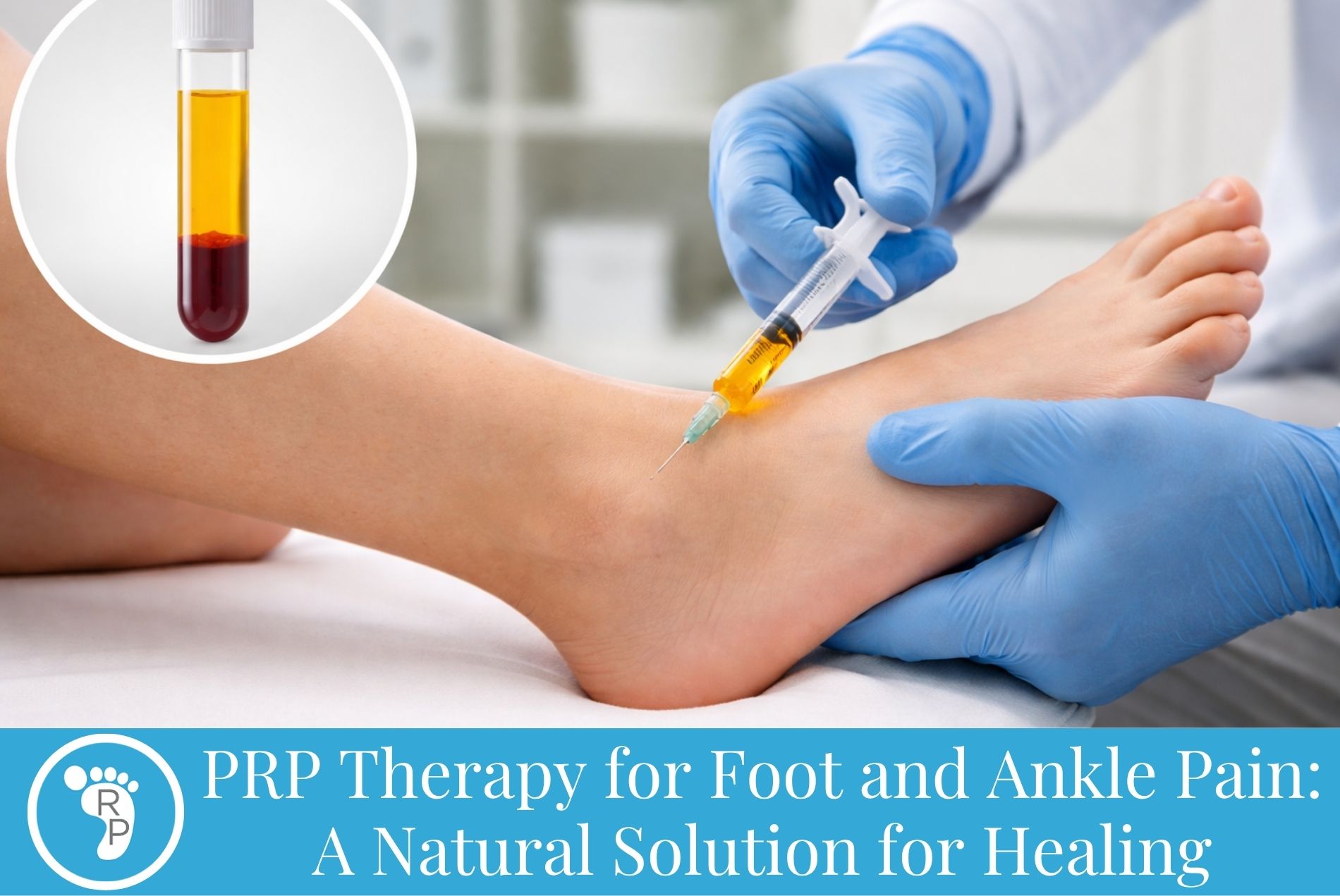
Foot and ankle pain can interfere with every step you take—literally. Whether caused by injury, overuse, or chronic conditions, these issues can significantly impact your daily life. At Dr. Rahul Patel, DPM, D. ABFAS, FACFAS, patients have access to advanced, non-surgical treatments like Platelet-Rich Plasma (PRP) therapy to promote healing and restore mobility.
What Is PRP Therapy?
Platelet-Rich Plasma (PRP) therapy is a regenerative treatment that uses your body’s own healing properties to repair damaged tissues. PRP is derived from your blood and contains a high concentration of platelets, growth factors, and proteins that accelerate healing.
The process involves:
- Drawing a small sample of your blood
- Spinning it in a centrifuge to isolate the platelet-rich plasma
- Injecting the PRP directly into the affected area of the foot or ankle
Because PRP is created from your own blood, it is a safe and natural treatment option with minimal risk of adverse reactions.
Conditions PRP Can Treat in the Foot and Ankle
PRP therapy is highly effective for a wide range of foot and ankle conditions, including:
- Plantar fasciitis
- Achilles tendonitis
- Ankle sprains and ligament injuries
- Tendon tears
- Arthritis-related pain
- Heel pain
- Chronic inflammation
Patients who have not responded well to traditional treatments like rest, physical therapy, or medications often find PRP to be a powerful alternative.
Benefits of PRP Therapy
PRP therapy offers several advantages over conventional treatments:
1. Natural Healing
PRP uses your body’s own biological materials, making it a holistic approach to recovery.
2. Minimally Invasive
No surgery is required, which means fewer risks and shorter recovery times.
3. Reduced Pain and Inflammation
PRP targets the root cause of pain rather than just masking symptoms.
4. Faster Recovery
Many patients experience quicker healing compared to traditional treatments.
5. Long-Lasting Results
By promoting tissue regeneration, PRP can provide lasting relief.
What to Expect During Treatment
PRP therapy is typically performed in-office and takes about 45–60 minutes. Most patients can return to normal activities shortly after the procedure, though some mild soreness at the injection site is common.
Dr. Rahul Patel customizes each treatment plan based on the patient’s condition, severity, and lifestyle needs to ensure optimal results.
Is PRP Right for You?
PRP therapy is an excellent option for patients who:
- Want to avoid surgery
- Have chronic or recurring foot and ankle pain
- Are seeking a natural, regenerative treatment
- Have not found relief with traditional therapies
A consultation with Dr. Rahul Patel can help determine if PRP is the right solution for your specific condition.
Frequently Asked Questions (Q&A)
What does PRP stand for?
PRP stands for Platelet-Rich Plasma, a concentration of healing components derived from your own blood.
Is PRP therapy painful?
Most patients experience minimal discomfort. A local anesthetic may be used to reduce pain during the injection.
How many treatments will I need?
The number of treatments varies depending on your condition, but many patients see improvement after one to three sessions.
How long does it take to see results?
Some patients notice improvement within a few weeks, with continued healing over several months.
Are there any side effects?
Because PRP uses your own blood, side effects are minimal. Mild swelling or soreness at the injection site is common but temporary.
Can PRP replace surgery?
In many cases, PRP can delay or even eliminate the need for surgery, especially for chronic conditions.
Is there downtime after the procedure?
Most patients can resume light activities shortly after treatment, though strenuous activity may be limited temporarily.
Is PRP covered by insurance?
Coverage varies by provider. It’s best to contact the office to discuss payment options and insurance details.
Who is not a good candidate for PRP?
Patients with certain blood disorders or active infections may not be ideal candidates. A consultation will determine eligibility.
How is PRP different from cortisone injections?
While cortisone reduces inflammation temporarily, PRP promotes long-term healing by repairing damaged tissue.
Why Choose Dr. Rahul Patel?
Dr. Rahul Patel, DPM, D. ABFAS, FACFAS is a highly trained foot and ankle specialist dedicated to providing cutting-edge, patient-centered care. With expertise in both conservative and advanced treatments, Dr. Patel focuses on helping patients return to pain-free movement as quickly and safely as possible.
Contact Information
Dr. Rahul Patel, DPM, D. ABFAS, FACFAS
245 5th Ave, Suite 310
New York, NY 10016
📞 Phone: (347) 851-1491
🌐 Website: https://docrahulpatel.com
📅 Appointments: https://docrahulpatel.com/appointments/
